
• Drones

    A project to create a true autonomous drone for the action sports enthusiast.

    Below is my UX study of it.

  • Back Story

    It started about 3 years ago. Researching what was a very new field. Recent advancements in microcontrollers made it possible to combine many sensors together to create an autonomous flying machine.

  • Problem

    My buddies and I were all very active mountain bikers and skiers. We were always annoyed at filming each other because the footage would come out extremely shaky and hard to view. So we took to the internet to see other people’s solutions. We saw a lot of things. From foam isolated cameras to cameras mounted on rubber bands. We saw some people using drones but during our time of research they were cumbersome and very hard to use. Generally requiring multiple users.

  • Process

    Time to figure out the most important issues

    1

    Research

    Went to meetups.

    Called drone enthusiasts.

    Talked to athletes.

    Talk to large drone companies

    2

    Compiled Results

    Created a list

    Rated pain points.

    Double-checked with customers.

    3

    Conclusion

    Compiled Results

    Identified Biggest Issues

    4

    Results

    Made changes based on results.

  • Pain Points

    Summary of the worst pain points.


    Drones are hard to control


    Not very durable or portable


    Not smart enough to be used without someone watching.


  • Solution

    Drones are hard to control

    Add autonomous flying aided by image recognition.

    Not very durable

    or portable

    Create a drone that you can grab out of the sky by enclosing the propellors. Give it sensors to avoid objects.

    Not smart enough to be used without someone watching.

    Use machine learning to auto launch and land. Have it be controlled from someones smartphone.

  • So we got to work.

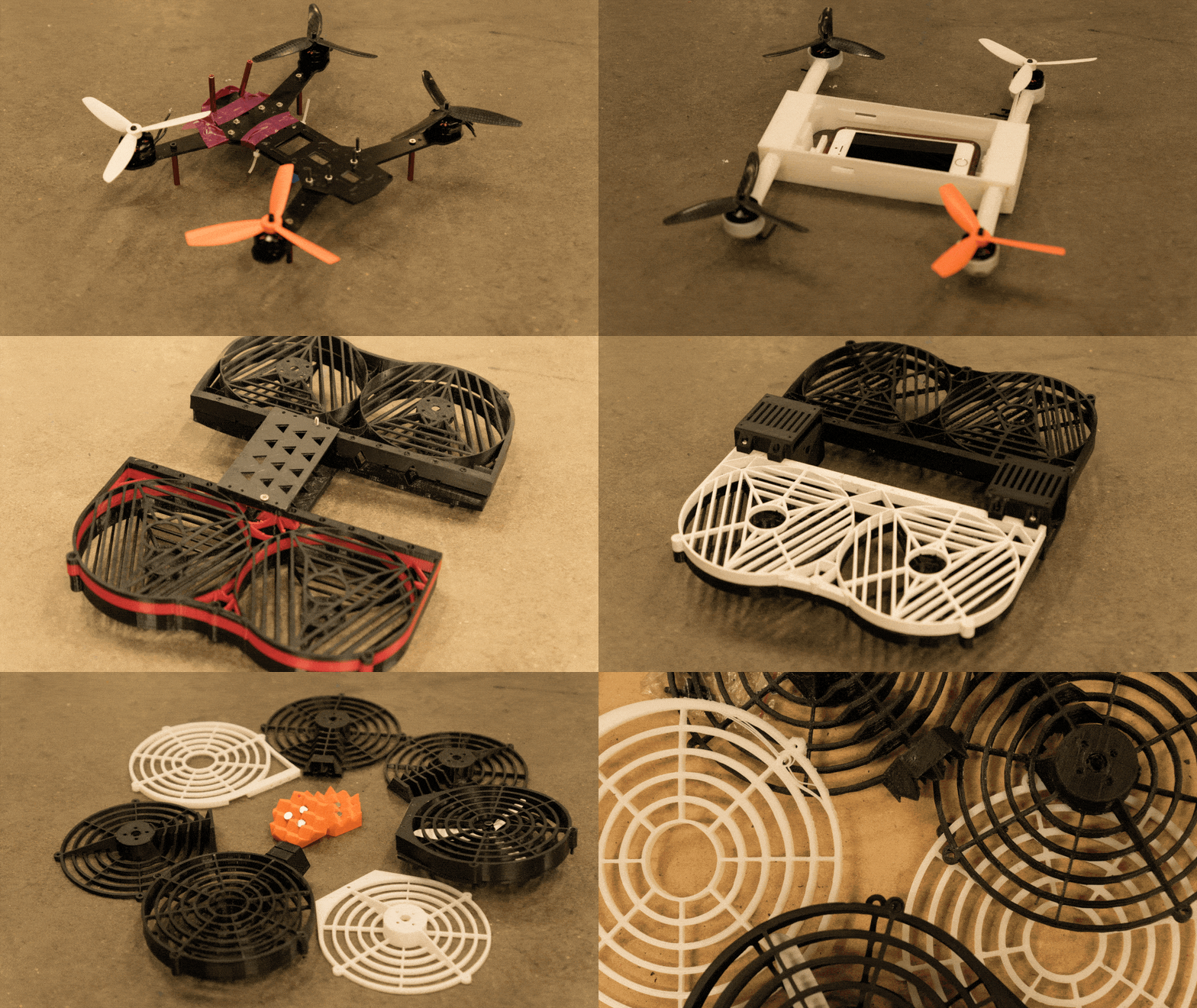
    We iterated through 30 different prototypes.
    Section image

    We decided to 3D print as much as we could.

    Overtime we took refined the design, increasing protection by 70 % and airflow by 130%.

  • We Flew

    The beginning was rough. But it got better with time.

    Section image

    As I tuned our custom flight controller software the drone began to get very stable flight.

  • It needed to see.

    We added image recognition.

    Section image

    We created our own image recognition algorithms in c++.

  • Easy to control

    We wanted to make it as simple to use as possible

    Section image

    I created a custom controller app which direction connection of bluetooth to the drone.
  • Conclusion

    We created a fully autonomous drone. It was able to follow us and film as at the same time with only our smartphone as a controller. This case study only scrapes the surface of all that we did. Some of the things not brought up include most of the programming. I had to optimize bandwidth to stream the drone's video feed to an iPhone. I practically wrote my own data transformation protocol.

    However, after testing this product with users, we hit the major pain points on the head and people loved it!